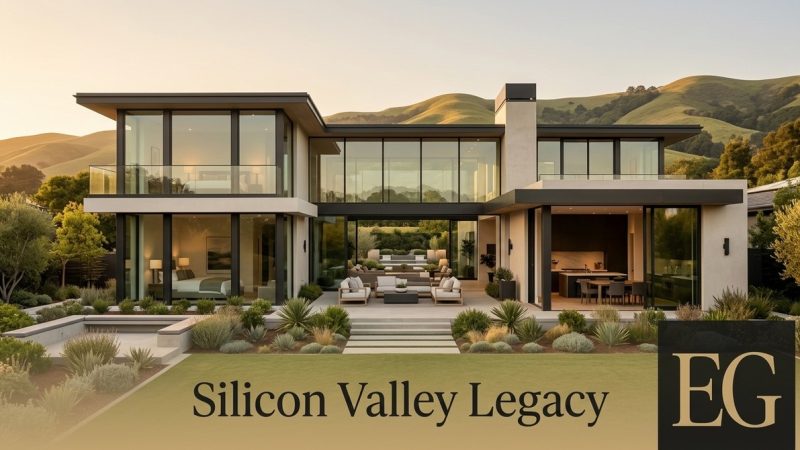

Case Study: Tech Executive Real Estate Acquisitions
The Bay Area real estate landscape operates as a critical component of high-net-worth portfolios. For business elites and industry leaders, property acquisition extends beyond residential utility. It represents a calculated asset allocation strategy. This case study examines recent trends in tech executive real estate acquisitions across Silicon Valley. By analyzing the public details of luxury home purchases by tech leaders, we can identify specific neighborhood preferences and estate requirements that drive sustained demand in this unique market.
Historically, liquidity events such as initial public offerings, corporate mergers, and secondary market sales have served as catalysts for significant capital deployment into local property markets. When high-profile executives secure substantial capital, their immediate focus often shifts toward asset preservation and portfolio diversification. In this context, residential real estate in prime Silicon Valley enclaves functions as a tangible, high-value asset class. Navigating the Silicon Valley real estate market requires a deep understanding of these macroeconomic drivers and the specific micro-market conditions that dictate property valuations across Santa Clara and San Mateo counties.
The Strategic Value of Tech Executive Real Estate
Understanding the motivations behind tech executive real estate acquisitions requires a shift in perspective. These transactions are rarely driven by emotional appeal or superficial aesthetics. Instead, they are evaluated through the lens of strategic investment and long-term asset management. High-net-worth individuals and their associated family offices analyze historical appreciation rates, zoning protections, and neighborhood development constraints before committing capital to any specific parcel.
The sustained demand for premium properties in the Bay Area is underpinned by a fundamental imbalance between supply and demand. Municipalities with strict zoning laws and limited buildable land inherently protect property values. For a tech executive, acquiring a legacy estate in a highly regulated market is a defensive financial maneuver. It hedges against inflation while providing a secure environment for personal and professional activities. The acquisition and disposition of these assets are handled with the same rigor as corporate mergers, requiring discrete, focused personal attention from experienced advisors who understand the complexities of high-yield portfolios.
Neighborhood Preferences in Silicon Valley
The geographic distribution of tech executive real estate acquisitions reveals distinct patterns based on the specific needs of the buyer. While the Bay Area offers numerous affluent communities, industry leaders consistently gravitate toward a select group of municipalities that offer a precise blend of privacy, proximity, and prestige.
Palo Alto: Proximity and Prestige
Palo Alto remains a primary target for executives who prioritize proximity to venture capital hubs and corporate headquarters. Neighborhoods such as Old Palo Alto and Crescent Park command premium valuations due to their historic significance and central location. Acquisitions in this area are often driven by the need for immediate access to Sand Hill Road and Stanford University. The properties here are viewed as networking assets, allowing executives to host discrete gatherings with board members and investors in a highly controlled environment. The density is higher than in the foothills, but the strategic location justifies the premium price per square foot.
Los Altos and Los Altos Hills: Privacy and Acreage
For buyers whose primary directive is privacy, Los Altos and Los Altos Hills offer unparalleled opportunities. Los Altos Hills, in particular, mandates minimum lot sizes that prevent high-density development. This zoning strategy ensures that estates remain secluded, making it a preferred destination for high-profile figures who require extensive security perimeters. Tech executive real estate acquisitions in Los Altos Hills frequently involve properties with multiple acres, allowing for the construction of compound-style living arrangements. These estates often feature secondary structures for security personnel, private access roads, and extensive setbacks from public thoroughfares.
Willow Glen and Saratoga: Community and Architecture
Further south, communities like Willow Glen and Saratoga attract executives seeking architecturally significant properties with a distinct community infrastructure. Willow Glen offers a unique blend of historic architecture and modern amenities, appealing to buyers who value neighborhood integration alongside their privacy. Saratoga provides expansive hillside estates with panoramic views of the valley, combining the acreage found in Los Altos Hills with a slightly different micro-climate and community dynamic. Each of these neighborhoods represents a distinct asset class within a broader strategic investment portfolio.
Estate Requirements for High-Profile Buyers
The physical requirements of tech executive real estate have evolved significantly over the past decade. The traditional metrics of luxury, such as square footage and premium materials, are now considered baseline expectations. Today, high-profile buyers demand specialized infrastructure that supports both their personal security and their professional obligations.
Advanced Security and Privacy Infrastructure
Security is the paramount concern for public-facing tech leaders. Real estate acquisitions are heavily scrutinized for their defensive capabilities. Buyers evaluate sightlines from neighboring properties, the structural integrity of perimeter fencing, and the capacity for enterprise-grade surveillance systems. Properties situated on flag lots or those featuring gated, private driveways command a premium. In many cases, the initial acquisition is followed by substantial capital improvements designed to harden the property against physical and digital intrusions, ensuring a secure perimeter for the principal and their family.
Multi-Functional Spaces for Business
The modern tech executive requires a residence that can seamlessly transition into a corporate command center. Tech executive real estate acquisitions frequently prioritize properties with dedicated, acoustically isolated spaces for global communications. These are not standard home offices; they are fully equipped boardrooms featuring secure network infrastructure, redundant power supplies, and teleconferencing capabilities that rival corporate headquarters. The ability to conduct sensitive negotiations and manage global teams from the privacy of a residential estate is a critical requirement for this buyer demographic.
Architectural and Zoning Constraints in Silicon Valley
A significant factor driving the value of existing luxury estates is the difficulty of ground-up construction in the Bay Area. Environmental regulations, stringent building codes, and rigorous local planning commissions make developing new compounds a multi-year endeavor. Consequently, fully developed estates that already possess the necessary infrastructure and square footage are highly prized. Executives often prefer to acquire an existing, compliant property and execute targeted interior renovations rather than navigate the unpredictable timeline of new construction. This reality further constricts the supply of available tech executive real estate, driving sustained demand for turnkey legacy properties.
Market Dynamics Impacting Tech Executive Real Estate
The acquisition process for ultra-luxury properties in Silicon Valley operates on a parallel track to the traditional real estate market. A significant percentage of tech executive real estate transactions occur off-market. These pocket listings are circulated privately among a closed network of elite advisors and wealth managers. This discrete approach protects the privacy of both the buyer and the seller, preventing public speculation regarding the executive’s financial liquidity or personal movements.
The Role of Non-Disclosure Agreements
Discretion is formalized through the extensive use of non-disclosure agreements. Before a property is even shown to a prospective high-profile buyer, all parties (including advisors, inspectors, and support staff) are typically required to execute strict confidentiality contracts. This ensures that the specific security layouts, technological integrations, and financial terms of the transaction remain entirely private.
Navigating this opaque market requires an advisor with deep, lifelong local knowledge and established peer-to-peer relationships. When a highly desirable property does reach the open market, it often triggers multiple-offer scenarios. In these situations, the terms of the offer are just as critical as the purchase price. High-net-worth buyers frequently utilize all-cash offers, waived contingencies, and flexible closing timelines to secure their desired assets. Alternatively, they may employ complex financing structures, leveraging their equity portfolios to maintain liquidity while acquiring the property.
Structuring the Acquisition and Disposition
The legal and financial structuring of tech executive real estate acquisitions is a complex process that requires coordination between real estate advisors, legal experts, and tax professionals. Properties are rarely purchased in the individual executive’s name. Instead, acquisitions are executed through blind trusts, limited liability companies, or other corporate entities to ensure maximum anonymity.
This level of structuring is essential for offshore investors and domestic executives alike. It shields the asset from public records and provides a critical layer of liability protection. Furthermore, the disposition of these assets requires careful tax planning. Strategies such as 1031 exchanges or charitable remainder trusts are frequently employed to mitigate capital gains taxes and optimize the financial outcome of the sale. A successful discrete property acquisition relies on a real estate advisor who understands these mechanisms and can seamlessly integrate into the client’s broader wealth management team.
Conclusion and Strategic Next Steps
The landscape of tech executive real estate in the Bay Area is defined by calculated decision-making, strict privacy requirements, and a focus on long-term asset preservation. Whether acquiring a legacy compound in Los Altos Hills or a strategic networking asset in Palo Alto, high-profile buyers approach real estate as a critical component of their overall business strategy. The sustained demand for these premium properties ensures that Silicon Valley remains one of the most resilient and competitive real estate markets globally.
Successfully navigating this environment requires an advisor who operates with the same level of precision and discretion as the clients they represent. By prioritizing a listen-first philosophy and focusing on data-driven market realities, buyers and sellers can achieve their strategic objectives in this complex arena.
Call or text Ed today for a no-obligation conversation about your real estate goals.