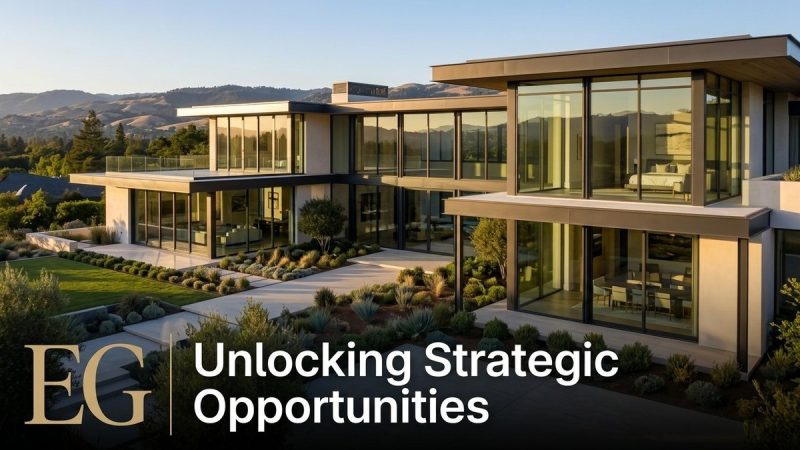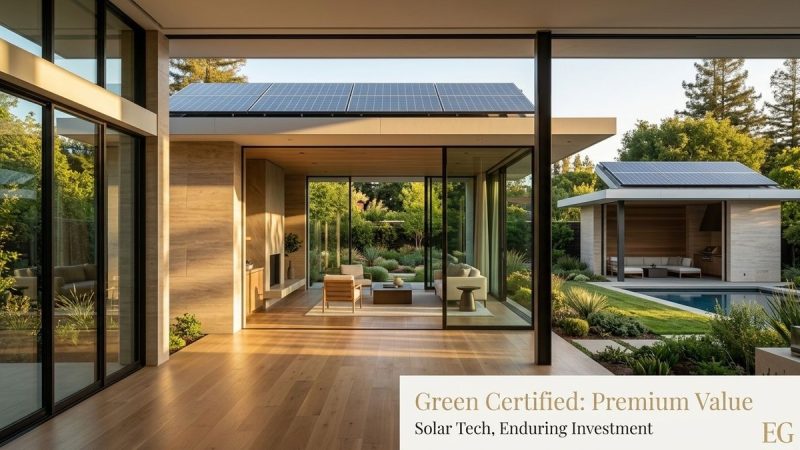
The Bay Area real estate landscape continually evolves in response to broader economic shifts, regulatory updates, and changing demographic requirements. For high-net-worth individuals, legal experts, and tech executives, residential acquisitions are no longer evaluated solely on the primary square footage or interior finishes. Instead, we are observing sustained demand for properties that offer flexible, multi-structure living arrangements. At the forefront of this structural shift is the rising prominence of Silicon Valley ADUs (Accessory Dwelling Units) and dedicated guest houses. These secondary structures represent a calculated business move, transforming a standard residential property into a versatile compound that serves both immediate family needs and long-term portfolio goals.
Table of Contents
- Market Drivers for Silicon Valley ADUs
- Facilitating Multi-Generational Living
- Privacy and Professional Flexibility
- Valuation and Portfolio Impact
- Infrastructure and Asset Preparation
- Local Realities: Los Altos to Palo Alto
- Frequently Asked Questions
- Strategic Next Steps
Market Drivers for Silicon Valley ADUs
To understand the current market dynamics, one must analyze the legislative changes that have reshaped California housing development. Over the past several years, state mandates have systematically reduced local barriers to the construction of secondary dwellings. This regulatory easing has catalyzed a wave of development, but it has also created a premium market for properties where this development is already complete. For business elites, time is the ultimate luxury. Acquiring a property with a fully permitted, architecturally cohesive guest house bypasses the lengthy entitlement, design, and construction phases. This immediate utility is a significant driver of premium valuations, making existing Silicon Valley ADUs highly coveted assets in the current acquisition and disposition cycle.
Facilitating Multi-Generational Living
The demographic landscape of the Bay Area is shifting, leading to a pronounced increase in multi-generational households among affluent buyers. Aging parents require proximity for care and family integration, yet they also demand independence and privacy. Simultaneously, adult children establishing their careers in the highly competitive local economy often benefit from remaining on the family estate while building their own capital. Silicon Valley ADUs provide an elegant, structural solution to these complex family dynamics.
By offering a distinct living space complete with its own kitchen, bathroom, and private entrance, these units facilitate close family bonds without compromising personal space. This approach aligns perfectly with comprehensive estate planning and multigenerational living strategies, ensuring that the property serves the family across multiple decades and life stages.
Privacy and Professional Flexibility
Beyond family dynamics, the modern executive lifestyle demands unparalleled flexibility. Many of my clients routinely host offshore investors, board members, or out-of-town colleagues for extended periods. A detached guest house serves as a private executive suite, offering a level of discretion and convenience that a standard guest bedroom within the primary residence simply cannot match. The ability to offer autonomous accommodations is a hallmark of premium hospitality and discrete business relations.
Furthermore, as remote and hybrid work models solidify their permanence among the business elite, Silicon Valley ADUs are frequently repurposed as dedicated, high-end home offices. This physical separation between the primary residence and the workspace is crucial for maintaining focus, securing confidential corporate data, and establishing clear work-life boundaries. The secondary structure becomes a dedicated center of productivity, insulated from the daily operations of the main household.
Valuation and Portfolio Impact
From a purely financial perspective, the addition or acquisition of a secondary dwelling unit is a strategic investment. It increases the total gross living area of the parcel, a metric closely tied to overall property valuation. While some property owners leverage these units for rental income, the high-net-worth demographic typically prioritizes the optionality and privacy the structure provides over marginal rental yield. However, when evaluating smart Bay Area real estate investments, the presence of an ADU significantly broadens the buyer pool upon disposition.
Properties equipped with these versatile spaces consistently command a premium, experience shorter days on market, and frequently generate multiple-offer scenarios from buyers who recognize the intrinsic value of a multi-structure compound. It is important to note that appraisers evaluate these structures carefully, often assigning value based on the quality of construction, architectural cohesion with the main estate, and the specific utility they offer within the neighborhood context.
Infrastructure and Asset Preparation
For clients considering the addition of a secondary structure to their current portfolio, strategic asset preparation is paramount. The development of Silicon Valley ADUs requires rigorous attention to infrastructure. Upgrading electrical panels to support increased load, trenching for dedicated utilities, and ensuring proper drainage are foundational steps that must be executed flawlessly. A poorly integrated structure detracts from the overall estate value.
Architectural cohesion is equally critical. The most valuable guest houses mirror the design language, material quality, and finish level of the primary residence. This seamless integration ensures that the property reads as a unified, luxury compound rather than a primary home with an afterthought addition. Navigating these complexities requires a trusted advisor who understands both the micro-market demands and the logistical realities of high-end construction.
Local Realities: Los Altos to Palo Alto
Real estate is inherently local, and the integration of secondary structures varies significantly across our specific micro-markets. In Los Altos Hills, where expansive lot sizes and rolling topography are the norm, we frequently see substantial, detached guest houses. These structures often include their own private driveways, dedicated outdoor living spaces, and sometimes even secondary pool facilities. The emphasis here is on complete autonomy and estate-level luxury.
Conversely, in Palo Alto, where lot sizes are more constrained and zoning is denser, attached Silicon Valley ADUs or meticulously converted garages are more prevalent. In these environments, the focus shifts to maximizing spatial efficiency and integrating the unit seamlessly into the existing footprint. In neighborhoods like Willow Glen, buyers appreciate the historic integration of carriage houses and secondary structures that blend with the established, traditional character of the community. Understanding these neighborhood-level nuances is essential for accurately assessing multi-generational living dynamics and determining the true market value of a property.
Frequently Asked Questions
How do ADUs impact property taxes?
In Santa Clara County, adding an ADU typically triggers a blended assessment. The existing primary residence retains its current Proposition 13 tax base, while the new construction (the ADU) is assessed at its current market value. This means your property taxes will increase based on the value of the addition, but the entire property is not reassessed.
Are detached structures more valuable?
Generally, detached Silicon Valley ADUs command a premium due to the enhanced privacy and noise separation they offer. However, the value is highly dependent on the specific lot size and neighborhood norms. In denser areas, a well-executed attached unit can be equally desirable if it provides a private entrance and dedicated outdoor space.
What are the zoning limitations?
While state law has superseded many local restrictions, municipalities still enforce specific development standards regarding setbacks, height limits, and maximum square footage. These regulations dictate the feasible scope of any secondary structure project and must be reviewed during the due diligence phase of any acquisition.
Strategic Next Steps
The integration of secondary dwellings into the luxury real estate market is not a passing trend; it is a fundamental shift in how high-net-worth individuals utilize and value their residential assets. Whether you are seeking to acquire a property with an existing guest house to accommodate your extended family, or you are evaluating the disposition of a multi-structure compound, navigating this market requires deep local knowledge and sharp business instincts.
My practice is built on a simple principle: listen first, then deliver results with focused, personal attention. If you are considering how Silicon Valley ADUs might factor into your long-term portfolio strategy, I invite you to reach out. Call or text Ed today for a no-obligation conversation about your real estate goals.