
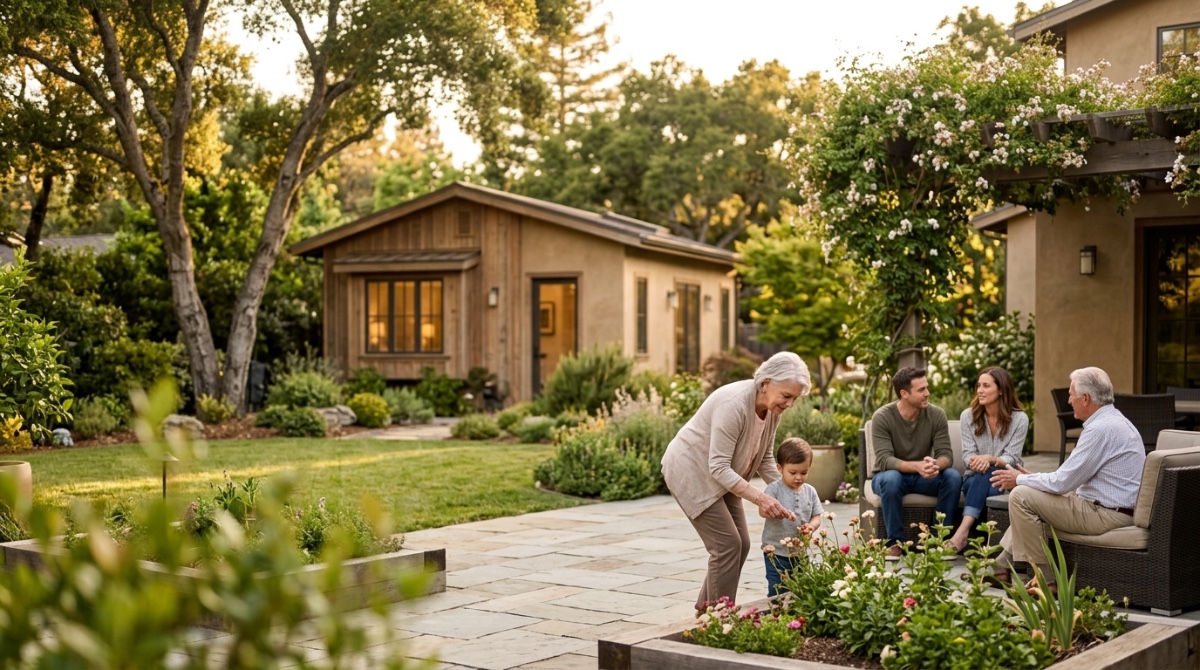
Multigenerational Living and Estate Planning
The landscape of Bay Area real estate requires constant adaptation to macroeconomic shifts and evolving family dynamics. For high-net-worth individuals, residential property is not merely a place of residence; it is a cornerstone of a comprehensive wealth management strategy. In recent years, we have observed a pronounced shift toward multigenerational living in the region. This trend is driven by a desire for family proximity, the strategic consolidation of assets, and the optimization of estate planning vehicles. As business elites evaluate their portfolios, properties equipped with Accessory Dwelling Units (ADUs) or expansive guest houses have transitioned from niche desires to highly sought-after strategic investments. Understanding the nuances of multigenerational living is essential for maximizing your financial outcome in today’s competitive market.
Table of Contents
- The Rise of Multigenerational Living in Silicon Valley
- Estate Planning and Asset Consolidation
- Evaluating ADUs as Portfolio Assets
- Navigating Local Zoning and Development
- Financing Multigenerational Estates
- The Role of Privacy and Architecture
- Micro-Market Dynamics in Santa Clara County
- Strategic Acquisition of Compound Properties
- Long-Term Capital Preservation
The Rise of Multigenerational Living in Silicon Valley
The drive toward multigenerational living is not a temporary market fluctuation. It represents a fundamental realignment in how Silicon Valley executives and offshore investors approach their real estate portfolios. Sustained demand for properties that can accommodate extended families is reshaping inventory absorption rates across premium neighborhoods. Families are increasingly choosing to consolidate their capital into a single, substantial estate rather than maintaining multiple smaller properties across different states or municipalities. This consolidation offers distinct advantages in property management, security, and familial cohesion.
Furthermore, the rising costs of elder care and the desire to keep aging parents closely integrated into daily family life have accelerated this shift. By bringing multiple generations under one roof, or at least onto one parcel of land, families can pool resources and provide a higher standard of living for all members involved. This practical utility translates directly into sustained market demand for compound-style properties.
Estate Planning and Asset Consolidation
Integrating real estate acquisitions with comprehensive wealth transfer strategies is a critical component of modern portfolio management. Multigenerational living naturally aligns with advanced estate planning objectives. By acquiring a primary residence that includes a guest house or ADU, families can establish a centralized asset that serves multiple generations simultaneously. This approach simplifies the eventual transfer of wealth, as the property can be placed within a family trust or limited liability company.
When structuring these acquisitions, it is vital to consult with legal and tax professionals to ensure the property aligns with your broader financial goals. For a deeper analysis of how these acquisitions fit into long-term wealth strategies, review our insights on estate planning and multigenerational living strategies. Proper structuring can mitigate future tax liabilities and provide a seamless transition of assets to the next generation, ensuring that the family compound remains a protected cornerstone of your legacy.
Evaluating ADUs as Portfolio Assets
From a purely financial perspective, Accessory Dwelling Units represent a strategic investment that enhances the underlying value of a residential asset. The addition of an ADU increases the functional square footage and utility of a property, directly impacting its market valuation. For clients focused on acquisition and disposition, a property with a permitted, high-quality ADU commands a significant premium in the current market.
However, evaluating these assets requires a clear understanding of local tax assessments. Adding new construction to an existing parcel will trigger a reassessment of the newly constructed portion, which alters the overall tax profile of the estate. Investors must weigh the construction costs and increased tax burden against the immediate equity gains and utility. To navigate these financial nuances, I recommend reading our comprehensive guide on property tax implications in Santa Clara County. A calculated approach to these tax variables is essential for maintaining a healthy return on investment.
Navigating Local Zoning and Development
The decision to build an ADU versus acquiring a property with an existing guest house is a calculated business move. Silicon Valley municipalities have distinct zoning ordinances, setback requirements, and permitting timelines. In Palo Alto, for example, dense lot configurations and strict tree preservation ordinances can complicate new construction. Conversely, the expansive lots in Los Altos Hills or Saratoga offer more flexibility for developing substantial secondary structures.
Navigating these local realities requires deep, neighborhood-level knowledge. The permitting process can be lengthy and capital-intensive. Therefore, many buyers prefer the strategic acquisition of turnkey properties where the development risk has already been absorbed by the previous owner. For further context on how these structures are utilized locally, explore our commentary on guest houses and ADUs in the Bay Area. Understanding the regulatory environment is the first step in executing a successful development strategy.
Financing Multigenerational Estates
The financial mechanics of acquiring a property suited for multigenerational living often differ from standard residential transactions. High-net-worth clients frequently utilize portfolio loans, cross-collateralization, or asset-backed securities to fund these substantial acquisitions without liquidating other performing investments. When multiple generations are involved in the purchase, structuring the financing requires meticulous coordination between wealth managers, legal counsel, and real estate advisors.
Furthermore, the presence of a permitted ADU can sometimes be factored into the underwriting process, potentially altering the debt-to-income calculations if the unit is projected to generate rental income. However, for most of my clients, the primary goal is not rental yield but rather family utility and long-term appreciation. Establishing the correct financial framework at the outset is a critical step in ensuring the asset serves its intended purpose within the broader estate plan.
The Role of Privacy and Architecture
A successful multigenerational living arrangement hinges on architectural design that balances proximity with privacy. The most sought-after properties in Silicon Valley are those where the architect has thoughtfully integrated the secondary dwelling into the site plan. This means considering sightlines, acoustic insulation, and independent access points.
For example, a luxury estate in Los Altos Hills might feature an ADU situated at a different elevation than the main house, utilizing the natural topography to create a distinct, private environment. In flatter areas like Palo Alto or San Jose, landscape architecture plays a vital role. Mature hedging, strategic fencing, and dedicated courtyards are employed to delineate spaces. When evaluating a property for multigenerational living, assessing these architectural nuances is just as important as reviewing the square footage. Properties that fail to provide adequate privacy often require substantial capital expenditure to correct, which must be factored into the initial acquisition strategy.
Micro-Market Dynamics in Santa Clara County
The implementation of multigenerational living varies significantly across different micro-markets within Silicon Valley. In Willow Glen, buyers often seek historic homes with detached carriage houses that have been converted into modern living spaces. These properties offer charm and proximity to urban amenities, appealing to younger tech executives who wish to house aging parents nearby.
In contrast, the luxury estates of Los Altos and Cupertino are evaluated based on their capacity to support entirely independent living quarters. Buyers in these markets prioritize separate entrances, dedicated parking, and private outdoor spaces for the secondary units. This level of separation ensures privacy while maintaining the benefits of proximity. In Mountain View and Sunnyvale, the approach is heavily influenced by lot constraints and proximity to major tech campuses. Here, we see a high demand for attached ADUs or converted lower levels that maximize the existing footprint. Understanding these micro-market preferences is essential for positioning a property for future disposition.
Strategic Acquisition of Compound Properties
Identifying and acquiring the ideal property for multigenerational living requires a disciplined, data-driven approach. The inventory of premium family compounds is historically constrained, often resulting in multiple-offer situations. Success in this environment depends on a clear strategy for pricing, property preparation, and aggressive negotiation.
When representing buyers, my focus is on evaluating the long-term utility of the asset. Does the floor plan allow for aging in place. Are the secondary structures fully permitted and compliant with current building codes. Answering these questions mitigates risk and ensures the asset will perform as expected within the client’s portfolio. The complexities of the escrow process in these transactions cannot be overstated. Title reviews must meticulously examine permit histories and zoning variances to protect the buyer’s capital. For those looking to expand their footprint in premium neighborhoods, our analysis of strategic residential acquisitions in Los Altos and Palo Alto provides valuable market intelligence.
Long-Term Capital Preservation
Ultimately, the trend toward multigenerational living is rooted in capital preservation. Real estate in Silicon Valley remains one of the most resilient asset classes available to high-net-worth investors. By adapting to the evolving demands of extended families, property owners can ensure their assets remain highly liquid and desirable in future market cycles.
Whether you are acquiring a new family compound or evaluating the potential of adding an ADU to your current estate, every decision should be treated as a strategic investment. The complexities of the Bay Area market demand an expert negotiator who listens to your specific goals and delivers results with confidence and integrity.
Call or text Ed today for a no-obligation conversation about your real estate goals.